Call Us Today
Call Us Today
A Specialist on Spherical Roller Bearings Since 1969

- All
- Product Name
- Product Keyword
- Product Model
- Product Summary
- Product Description
- Multi Field Search


Views: 0
Bearing blocks are fundamental components in a wide range of industrial machinery. They support rotating shafts, reduce friction, and maintain precise alignment in high-load or high-speed environments. Choosing the right bearing block is not just about dimensions or materials. It’s a decision that can significantly affect the reliability, efficiency, and longevity of your entire operation.
In this guide, we will explore the key factors you need to consider when selecting a bearing block for industrial use. We’ll also introduce a trusted manufacturer, WGB Bearing, which provides high-quality bearing solutions for industrial applications. To learn more about their full product line and engineering support, visit www.wgbbearing.com.
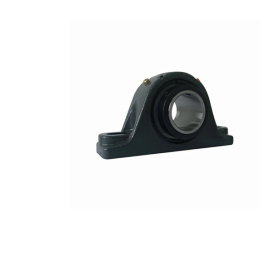
A bearing block, also referred to as a pillow block or plummer block, is a housing that supports a bearing. It allows the mounted bearing to support a rotating shaft with minimum friction. The housing is typically made of cast iron, ductile iron, or stainless steel, and contains an insert bearing, which can be a ball bearing, roller bearing, or other specialized type.
Bearing blocks are used in countless industrial settings, including conveyor systems, electric motors, pumps, compressors, construction equipment, and manufacturing lines. Their versatility and ease of installation make them essential in keeping systems aligned and running smoothly.
The right bearing block can improve equipment performance, reduce vibration, and extend maintenance intervals. Conversely, the wrong choice can lead to misalignment, excessive wear, overheating, and ultimately, machinery breakdowns.
Choosing the right bearing block isn't only about compatibility with shaft size or machinery layout. It requires a deep understanding of application conditions such as load direction, speed, temperature, contamination risk, and installation space.
The first consideration is load. You need to know the type and magnitude of the loads the bearing block will support. Radial loads act perpendicular to the shaft, while axial (or thrust) loads act along the axis of the shaft.
If your machinery is subject to high axial or combined loads, such as in mining or heavy-duty gearboxes, opt for bearing blocks with roller bearing inserts instead of standard ball bearings. These can better distribute the forces and resist deformation under pressure.
Each bearing block must be precisely matched to the shaft diameter. A mismatch could cause imbalance, shaft deflection, or excessive vibration. Most bearing blocks are available in both metric and imperial dimensions, with options to fit shafts from 20 mm up to 180 mm in diameter.
WGB Bearing offers a wide range of shaft-matching solutions, including standard sizes and custom machining for specialized needs. You can find out more at www.wgbbearing.com.
The housing material should reflect the environment in which the bearing block will operate. For example:
Cast iron is durable and cost-effective, suitable for general industrial use
Stainless steel offers superior corrosion resistance, ideal for food processing, chemical, or marine environments
Thermoplastic or polymer housings are non-corrosive and easy to clean, suitable for light-duty or hygienic applications
The choice of material impacts heat resistance, chemical resistance, mechanical strength, and overall lifespan.
Different machinery designs call for different mounting styles. The most common types of bearing blocks include:
Pillow blocks: Designed for mounting on flat surfaces and used in horizontal shaft applications
Flanged units: Available in 2-bolt, 3-bolt, or 4-bolt configurations for wall or vertical surface mounting
Take-up units: Used in applications that require adjustable shaft positioning, such as belt tensioners or conveyors
Consider how the bearing block will be installed and whether it needs to accommodate movement, alignment adjustments, or confined space.
The internal bearing is just as important as the housing. Common insert types include:
Ball bearings: Suitable for moderate loads and high-speed applications
Spherical roller bearings: Ideal for high-load or misalignment-prone systems
Tapered roller bearings: Excellent for combined radial and axial loads
The bearing type determines load capacity, speed rating, and alignment capability. WGB Bearing provides all these types with options for seals, lubrication ports, and enhanced durability.
Dust, moisture, and chemicals are common threats in industrial environments. Choose bearing blocks with the right seal for your application:
Single-lip seals offer basic protection in clean environments
Triple-lip seals or labyrinth seals are better for dirty, wet, or corrosive environments
For applications that run continuously, make sure the bearing has accessible grease fittings and supports relubrication. Proper lubrication reduces friction, prevents overheating, and extends bearing life.
Industrial machinery may operate under extreme conditions. Make sure the bearing block you choose can handle both the temperature range and RPM (revolutions per minute) of your equipment. High-speed applications may require specialized inserts with reduced friction and balanced cages, while high-temperature environments need grease and seals rated for heat resistance.
Different industries have specific bearing demands:
In food and beverage manufacturing, bearing blocks must meet hygiene standards and resist washdown
In mining, bearing blocks must support high loads, resist shock, and work in dusty or abrasive conditions
In textile or paper industries, speed and moisture resistance may be the top priorities
WGB Bearing specializes in custom and application-specific solutions. Their products are engineered to meet the challenges of your industry. Visit www.wgbbearing.com to explore their catalog or contact their team for guidance.
WGB Bearing is a reliable supplier known for quality craftsmanship, innovation, and technical support. Whether you need standard pillow blocks, custom mounting solutions, or high-performance inserts, they have the right product to meet your needs.
Here’s what sets them apart:
Precision insert bearings designed for long life and easy maintenance
Customized bearing block solutions for specialized machinery
Fast global shipping and responsive customer support
Engineering consultation and product selection assistance
When choosing bearing blocks for your critical equipment, partner with a manufacturer that understands industrial demands. Visit www.wgbbearing.com today and explore solutions tailored to your exact specifications.
Selecting the right bearing block for industrial machinery involves more than just checking shaft diameter. It requires an understanding of mechanical loads, environmental conditions, material compatibility, and application-specific needs. By making informed decisions, you can improve machine efficiency, reduce downtime, and extend system life.
For high-performance bearing blocks built to meet industrial challenges, trust WGB Bearing as your go-to source. Their expertise, customization options, and global reach make them the ideal partner for your bearing needs.