Call Us Today
Call Us Today
A Specialist on Spherical Roller Bearings Since 1969

- All
- Product Name
- Product Keyword
- Product Model
- Product Summary
- Product Description
- Multi Field Search


Views: 0 Author: Site Editor Publish Time: 2026-01-26 Origin: Site


When selecting a roller bearing for a specific application, ensuring the correct select is critical to the overall performance and longevity of your machinery. Incorrect selecting can lead to premature failure, increased friction, and poor efficiency, ultimately resulting in downtime and costly repairs. WGB Bearing, a leading manufacturer of high-quality roller bearings, offers comprehensive solutions for a wide range of industrial applications. This article will guide you through the process of selecting roller bearings, explaining key parameters, a step-by-step selecting process, and common mistakes to avoid. With this information, you’ll be able to make informed decisions and select the right roller bearing for your machinery needs.
Accurately selecting a roller bearing is essential to ensure the reliability and efficiency of mechanical systems. The right bearing select allows for smooth operation, reduces friction, and ensures that the machinery can handle the required loads. WGB Bearing specializes in offering a wide range of roller bearings, from cylindrical to spherical roller bearings, designed to meet various industrial needs.
Proper selecting is especially critical for industries like automotive, construction, and manufacturing, where components are subjected to extreme stress, vibrations, and high loads. selecting involves evaluating the bearing’s ability to handle both radial and axial loads, speed requirements, and operating conditions. Choosing the wrong select, whether by overselecting or underselecting, can have detrimental effects on system performance, causing unnecessary wear, energy losses, and potential bearing failure.
In this guide, we’ll explore how to properly select a roller bearing to ensure optimal performance, durability, and efficiency.
The select of a roller bearing is determined by several key parameters that directly affect its performance in different applications. These parameters include radial and axial load needs, speed requirements, and temperature conditions. Understanding these factors is crucial for selecting the right bearing for the job.
Radial load refers to the force that is applied perpendicular to the shaft. This is the most common type of load encountered by roller bearings in industrial machinery. When selecting a roller bearing, you must ensure that the bearing can handle the expected radial load. Bearings that are too small for the load will experience excessive wear, reducing their lifespan and increasing the risk of failure.
On the other hand, overselectd bearings can lead to inefficiencies, as they may cause additional friction and energy consumption. WGB Bearing offers a variety of roller bearings designed to handle high radial loads while ensuring smooth, efficient operation. Depending on the application, cylindrical roller bearings are ideal for high radial loads, while spherical roller bearings are preferred in applications where misalignment is a concern.
Axial load is the force applied parallel to the shaft. Bearings that need to support axial loads should be selectd accordingly. Many roller bearings, especially tapered and spherical roller bearings, are designed to handle both radial and axial loads simultaneously. In contrast, other types of roller bearings, like cylindrical roller bearings, may not be suitable for axial loads unless specifically designed for that purpose.
For applications that require support for axial loads, such as automotive axles or gearboxes, roller bearings that can handle both radial and axial forces, like tapered roller bearings, are recommended. Choosing the correct bearing for these applications is crucial to avoid excessive wear on both the bearing and the machinery components.
Speed is another critical factor when selecting a roller bearing. Bearings that operate at high speeds generate more heat due to friction, which can lead to premature wear or failure if the bearing is not selectd correctly. Ball bearings are often used in high-speed applications, but roller bearings can perform well at moderate speeds. However, roller bearings are typically better suited for heavy-load and medium-speed applications.
When selecting roller bearings for high-speed applications, ensure that the bearing can handle the increased friction without overheating. Bearings used in high-speed applications must also be selected to reduce wear caused by heat buildup. In applications with low speed and high load, roller bearings are ideal as they can handle significant forces without causing excessive friction.
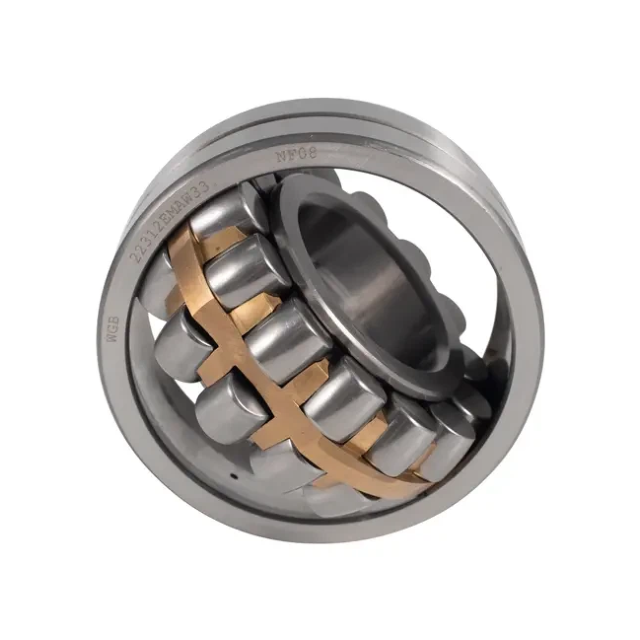
To select a roller bearing correctly, you need to follow a systematic process that considers the various load, speed, and environmental factors. Below is a step-by-step guide to help you select a roller bearing for your specific application.
The first step in the selecting process is to determine the total radial and axial loads that the bearing will need to support. This requires understanding the forces acting on the system, including the weight of the rotating components, external forces, and any dynamic loads that occur during operation. Make sure to include both static and dynamic loads in your calculations.
WGB Bearing offers bearings with different load capacities, so it’s essential to select one that meets or exceeds the calculated load ratings. Underselectd bearings will fail prematurely, while overselectd bearings may result in higher friction and energy losses.
Once you have determined the required load ratings, the next step is to consult the roller bearing manufacturer’s catalog to find bearings with the appropriate select and specifications. WGB Bearing provides a wide range of roller bearings with varying dimensions, materials, and design features to suit different applications.
The catalog will list the key dimensions, such as the inner and outer diameter, width, and load ratings, to help you choose the correct bearing select. It is essential to ensure that the bearing you select fits within the mechanical system and meets all the performance requirements.
Step | What to Measure | Why It Matters |
1 | Radial load | Ensures bearing capacity |
2 | Axial load | Ensures thrust capability |
3 | Speed | Limits friction/heat |
4 | Operating temp | Affects material performance |
Operating temperature is an important factor when selecting a roller bearing. Extreme temperatures can affect the material properties of the bearing, causing it to expand, contract, or wear prematurely. If the bearing will operate in extreme conditions, be sure to select specified process that are designed to withstand high or low temperatures. For example, bearings made by high temperature tempering can withstand higher temperatures, ensuring reliable performance even in extreme environments.
While selecting roller bearings may seem straightforward, there are several common mistakes that can lead to poor performance and premature failure.
One of the most common mistakes in bearing selecting is choosing a bearing that is either too large or too small for the application. Overselecting a bearing can lead to increased friction and energy consumption, reducing efficiency and raising costs. On the other hand, underselecting a bearing can lead to premature failure, as it will not be able to handle the required loads.
It’s essential to calculate the required load and speed ratings accurately and select a bearing that fits the application’s needs. WGB Bearing offers a wide selection of roller bearings designed to meet specific requirements for load capacity, speed, and operating conditions.
In conclusion, selecting a roller bearing correctly is critical to the performance and longevity of mechanical systems. By carefully evaluating factors such as radial and axial loads, speed requirements, and operating temperature, you can ensure that the right bearing is chosen for the application. At WGB Bearing, we offer a broad range of high-performance roller bearings that meet the needs of various industries. Whether you're looking for bearings for industrial machinery, automotive components, or construction equipment, WGB Bearing provides reliable and durable solutions to optimize machine performance.
For more information on our products and to select the right roller bearing for your needs, visit WGB Bearing Products or contact us today.
1. How do I calculate the required load ratings for a roller bearing?
To calculate the required load ratings, you need to account for both static and dynamic loads. This includes the weight of the rotating components, external forces, and dynamic forces that occur during operation.
2. What happens if I use an underselectd roller bearing?
Using an underselectd roller bearing can lead to premature failure, excessive wear, and reduced performance. The bearing will not be able to handle the required loads, causing it to break down faster.
3. Can roller bearings handle both radial and axial loads?
Yes, many types of roller bearings, such as tapered and spherical roller bearings, are designed to handle both radial and axial loads simultaneously, making them ideal for applications that require support in both directions.
4. Why is temperature important when selecting a roller bearing?
Operating temperature affects the material properties of the bearing. High temperatures can cause the bearing to expand and degrade faster, while low temperatures can make the material brittle. Choosing the right bearing material for the temperature conditions is essential for long-term performance.