Call Us Today
Call Us Today
A Specialist on Spherical Roller Bearings Since 1969

- All
- Product Name
- Product Keyword
- Product Model
- Product Summary
- Product Description
- Multi Field Search


Views: 0 Author: Site Editor Publish Time: 2026-08-22 Origin: Site


Power transmission systems operate under compounding physical stresses. Heavy radial loads, severe vibration, inevitable shaft misalignment, and harsh environmental contamination make bearing failure a leading cause of unplanned downtime. Industrial gearboxes and drive systems constantly battle particulate ingress and moisture. These contaminants degrade lubricants and destroy internal rolling surfaces rapidly.
Traditional open bearings require continuous, precise lubrication. They remain highly susceptible to particulate and moisture ingress. This exposure leads to accelerated wear, high maintenance overhead, and catastrophic gearbox or drive failures. External sealing arrangements add mechanical complexity, require additional shaft space, and introduce new failure points during installation.
Transitioning to sealed spherical roller bearings for power transmission offers a structural defense against contamination. These components maintain high load capacities and self-aligning properties while isolating the internal rolling elements from external threats. This guide provides a technical framework for evaluating these components for heavy-duty applications.
Contamination Control: Integral seals drastically reduce the ingress of abrasive particles and moisture, extending the Mean Time Between Failures (MTBF) in harsh environments.
Load, Vibration, and Alignment Synergy: These bearings accommodate heavy combined loads, shock vibration, and shaft deflections simultaneously, though sealed variants may have slightly reduced misalignment tolerances compared to open designs.
Maintenance Reduction: Pre-lubricated and sealed designs minimize the need for frequent relubrication, lowering grease consumption and reducing maintenance labor costs.
Application-Specific Selection: Choosing the right bearing requires balancing seal friction, thermal limits, dimensional constraints, and operating speeds, often necessitating specialized bearing engineering support for optimal integration.
Power transmission environments subject mechanical components to extreme operational realities. Drive systems must transmit high torque continuously while absorbing severe operational vibration. Equipment operating in mining, aggregate processing, or pulp and paper manufacturing faces constant exposure to industrial contaminants. Dust, water, and aggressive chemical washdowns actively attack rotating components on bucket elevators, conveyor pulleys, and agitator drives.
Establishing baseline requirements for a successful bearing solution requires analyzing these environmental threats. Maximum uptime remains the primary objective for plant managers. A predictable lifecycle allows maintenance teams to schedule replacements during planned outages rather than reacting to catastrophic mid-shift failures. Bearings must provide exceptional shock-load resistance to handle sudden torque spikes during equipment startup or material jamming. Finally, the solution must require minimal maintenance intervention, reducing the labor burden associated with continuous manual lubrication routes.
Open bearings rely entirely on external housing seals to keep contaminants out and lubricant in. When external seals degrade, the bearing environment becomes compromised. Hard particles enter the raceway, causing denting and subsequent spalling. Moisture ingress leads to hydrogen embrittlement and micro-cracking beneath the raceway surface. Lubricant degradation accelerates as water and dust alter the grease viscosity, leading to metal-to-metal contact and rapid scoring of the rolling elements.
External sealing arrangements carry hidden operational burdens. Labyrinth seals, taconite seals, and heavy-duty lip seals require complex housing designs. They demand additional axial space on the shaft, complicating gearbox layouts. Installation errors frequently compromise these external seals. Slight misalignments during assembly can create leakage paths, rendering the entire sealing arrangement ineffective before the equipment even begins operation. Field inspections routinely reveal labyrinth seals packed with hardened grease and dirt, completely failing to protect the internal bearing.
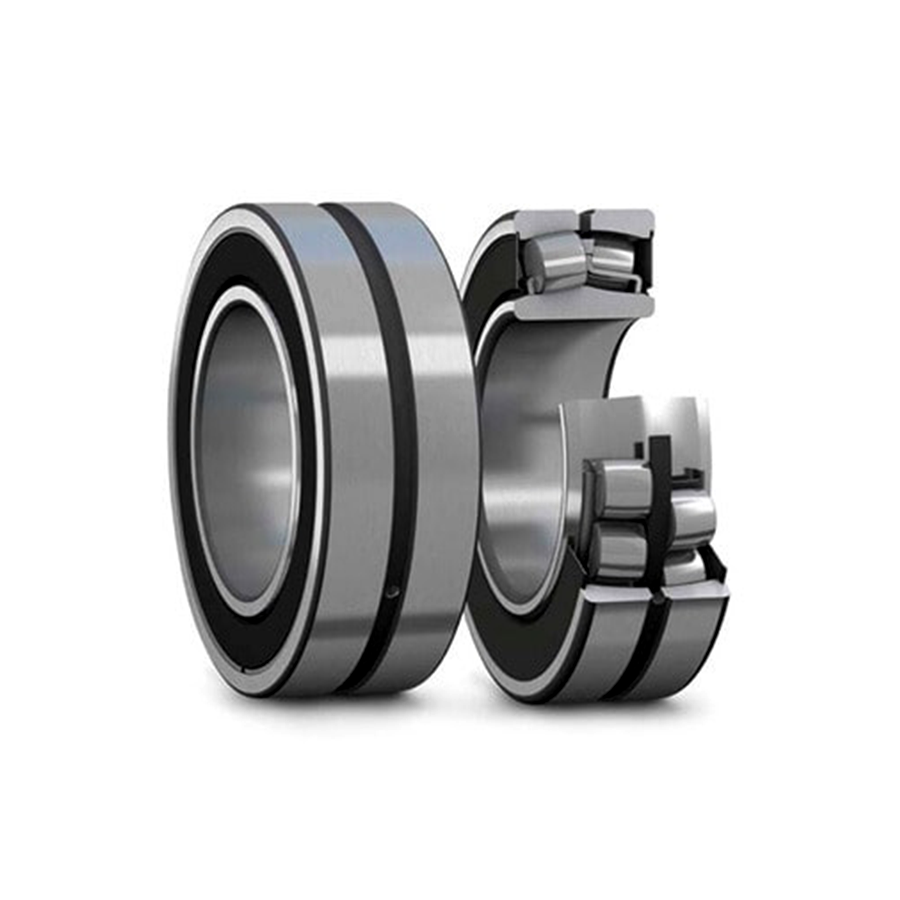
The internal architecture utilizes two rows of barrel-shaped rollers arranged symmetrically around a spherical outer raceway. This geometry allows the inner ring and roller assembly to pivot freely within the outer ring. The design inherently compensates for shaft deflection and housing misalignment without inducing destructive edge stresses on the rollers.
Contrasting this design with self-aligning ball bearings highlights its suitability for heavy machinery. Ball bearings utilize point contact, which limits their radial load capacity. A spherical roller bearing for drive systems utilizes line contact. The barrel rollers distribute applied forces over a much larger surface area. This line contact provides superior radial load capacity and exceptional resistance to shock vibration.
This internal geometry distributes heavy radial and axial loads evenly across both rows of rollers. When shaft deflection occurs under high torque, the spherical raceway ensures the load remains centered on the roller profile. This prevents edge loading, a common failure mode in rigid bearing designs where shaft bending concentrates stress at the very edge of the rolling elements, leading to premature fatigue flaking.
Integrated seals transform the standard spherical roller bearing into a closed system. The architecture typically involves contact seals fixed to the outer ring. The seal lips ride against specific sliding surfaces machined into the inner ring. Manufacturers utilize different elastomers based on environmental demands.
Seal Material | Temperature Limit | Primary Characteristics | Typical Applications |
|---|---|---|---|
Nitrile Butadiene Rubber (NBR) | -40°C to +120°C | Excellent wear resistance, good oil compatibility. | Standard conveyors, general industrial gearboxes. |
Hydrogenated Nitrile (HNBR) | -30°C to +150°C | Superior heat and oxidation resistance over standard NBR. | High-speed drives, moderately heated environments. |
Fluoroelastomer (FKM) | -20°C to +250°C | Exceptional chemical and high-temperature resistance. | Kiln drives, chemical mixers, high-temp exhaust fans. |
The seal design performs two simultaneous functions. It retains the factory-filled grease within the bearing cavity, ensuring continuous lubrication of the rolling contacts. Simultaneously, it excludes external contaminants. This integral defense mechanism eliminates the need for bulky external housing seals in many applications. The bearing becomes a self-contained, protected unit, simplifying housing design and reducing overall assembly footprint.
Evaluating bearing performance begins with dynamic and static load ratings. The dynamic load rating (C) dictates the theoretical fatigue life under continuous rotation. The static load rating (C0) determines the maximum load the bearing can withstand while stationary without suffering permanent plastic deformation. Heavy-duty power transmission requires components with high C0 ratings to survive sudden shock loads during startup or jamming events.
Calculating the adjusted rating life (L10m) provides a realistic projection of bearing longevity. The ISO 281 standard incorporates factors for reliability, material fatigue limits, and operating conditions. The cleanliness of the operating environment heavily influences the contamination factor (e_c). Integral seals drastically improve this contamination factor. By maintaining a pristine internal environment, sealed variants often achieve a significantly higher L10m operational life compared to open bearings operating in the same external conditions. A bearing that might only last 8,000 hours in a dusty environment unsealed can easily exceed 30,000 hours when properly sealed.
Self-aligning capabilities differ between sealed and open designs. Standard open spherical roller bearings typically accommodate 1.5 to 2 degrees of misalignment. This flexibility absorbs significant shaft bending and housing machining inaccuracies.
Sealed versions typically accommodate approximately 0.5 degrees of misalignment. Exceeding this limit causes the inner ring to pivot too far, distorting the integral seal lip. Seal distortion breaks the contact with the inner ring, allowing grease to escape and contaminants to enter. While reduced, this 0.5-degree tolerance effectively mitigates standard mounting errors and normal operational shaft bending without compromising the seal integrity.
Integrating contact seals introduces mechanical friction. The seal lip constantly rubs against the inner ring during rotation. This friction generates heat and lowers the maximum operating speed of the bearing. Engineers must carefully analyze the trade-off between contact seal friction and the required rotational speeds of the drive system.
Manufacturers employ internal kinematic optimizations to offset this heat generation. Advanced cage designs, optimized roller profiles, and specialized surface finishes reduce internal sliding friction between the rollers and raceways. These internal improvements help maintain low overall friction, compensating for the heat generated by the contact seals.
Thermal generation dictates the performance limits of a sealed bearing for gearbox systems. Standard NBR seals typically degrade above 120°C. If the combined heat from internal friction, seal contact, and ambient temperature exceeds this limit, the elastomer hardens and cracks. High-temperature applications require FKM seals, which maintain flexibility and sealing integrity up to 250°C. You must calculate the thermal equilibrium of the system to ensure the selected seal material will survive the continuous operating temperature.
Upgrading an existing open bearing to a sealed variant requires careful dimensional analysis. Many sealed bearings adhere to standard ISO dimension series. This ensures the outer diameter and bore diameter match the existing open bearing exactly.
However, potential housing clearance issues frequently arise. Some sealed variants require slightly wider widths to accommodate the integral seals without reducing the roller size. Even if the bearing width matches, the housing must provide adequate clearance around the seal area. If the housing shoulders or spacers contact the rotating seal lip, immediate seal destruction occurs. Engineers must verify internal housing configurations to prevent seal rubbing and ensure proper fitment during retrofitting.
Sealed variants carry a higher initial unit specification requirement due to the added complexity of integral seals and factory lubrication. Procurement teams must look beyond the initial acquisition phase to understand the true operational value.
The operational return becomes evident when evaluating the entire lifecycle. Sealed designs drastically reduce grease consumption. Facilities eliminate the need to procure, store, and pump large volumes of grease required to purge open bearings continuously. Furthermore, the elimination of external housing seals simplifies the bill of materials. Extended service life, driven by the pristine internal environment, reduces the frequency of bearing replacements and the associated labor hours.
Feature | Open Spherical Roller Bearings | Sealed Spherical Roller Bearings |
|---|---|---|
Contamination Resistance | Low (relies entirely on external housing seals) | High (integral seals block particulate and moisture) |
Misalignment Tolerance | High (typically 1.5° to 2.0°) | Moderate (typically limited to ~0.5°) |
Speed Limitations | High (limited only by internal kinematics) | Lower (restricted by seal lip friction and heat) |
Maintenance Frequency | High (requires continuous or frequent relubrication) | Low (often relubrication-free or highly extended intervals) |
Space Requirements | Requires additional axial space for external seals | Compact (seals integrated into bearing width) |
Integrating sealed bearings facilitates a shift from reactive, continuous lubrication to predictive maintenance. Many applications allow for relubrication-free operational windows, where the factory fill lasts the entire fatigue life of the bearing. This removes technicians from hazardous areas and eliminates the risk of over-lubrication, a common cause of bearing failure.
Condition monitoring integrates seamlessly with sealed designs. Vibration analysis and thermography provide clearer diagnostic data. Open bearings often generate baseline noise due to minor particulate denting. Sealed designs provide cleaner baseline data by eliminating contaminant-induced noise, allowing analysts to detect actual subsurface fatigue much earlier.
Certain heavy-duty scenarios still necessitate relubrication. High speeds, heavy loads, or extreme temperatures eventually degrade the factory grease. Sealed bearings accommodate this via specialized annular grooves and lubrication holes machined into the outer ring. The integral seals dictate the relubrication frequency, which is significantly lower than open bearings. The seals also act as relief valves, allowing old grease to purge without letting contaminants in.
Integral seals introduce specific handling vulnerabilities. The primary risk involves damaging the elastomer lips during mounting. Using improper tools, such as brass hammers or uncalibrated presses, can easily strike the seal. Excessive force applied to the outer ring when mounting on a shaft transmits damaging loads through the rollers and can deform the seal shield.
Standardized mounting procedures protect seal integrity. Thermal expansion remains the preferred method for mounting bearings with cylindrical bores. Technicians must follow a strict sequence to prevent seal damage:
Measure the shaft journal to confirm the interference fit is within specified tolerances.
Place the sealed bearing on an induction heater equipped with a magnetic temperature probe.
Set the maximum heating temperature based on the seal material (never exceed 90°C for standard NBR seals).
Heat the bearing evenly until the bore expands sufficiently.
Slide the bearing onto the shaft quickly and hold it against the shaft shoulder until it cools and grips the journal.
For tapered bores, hydraulic mounting techniques ensure precise axial drive-up without impact forces. Technicians must monitor internal clearance reduction carefully using feeler gauges or axial drive-up measurements to avoid over-tightening.
Relubricating a sealed bearing introduces the risk of chemical incompatibility. The factory fill grease features a specific thickener, such as lithium complex, polyurea, or calcium sulfonate. Injecting a supplemental grease with an incompatible thickener causes the mixture to separate. The oil bleeds out, leaving a hard, soap-like residue that blocks rolling elements and destroys the bearing.
Safe relubrication practices prevent seal blowout from over-pressurization. Technicians must pump grease slowly while the bearing rotates. Rotation distributes the fresh grease evenly and allows the old grease to purge gently past the seal lip. Using high-pressure pneumatic grease guns on a stationary bearing will instantly pop the integral seal out of its anchoring groove, destroying the bearing's primary defense mechanism.
Standard catalog bearings handle most industrial applications, but custom power transmission environments introduce unique variables. Extreme ambient temperatures, unique shaft interference fits, heavy shock vibration profiles, or specialized high-pressure washdown requirements push standard components past their operational limits.
Engaging bearing engineering support becomes critical for application engineering. Specialists analyze the exact duty cycle to develop custom-made project-specific solutions. This includes specifying customized seal materials like food-grade elastomers or highly chemical-resistant compounds. Engineering support also dictates optimized internal clearances. High-temperature applications often require C3 or C4 radial internal clearances to accommodate thermal expansion of the inner ring without causing the bearing to seize on the shaft.
Conduct a rigorous failure analysis on currently installed open bearings to confirm that particulate ingress or moisture is the root cause of failure.
Calculate the required dynamic load and thermal reference speed ratings to ensure the sealed variant meets the drive system's operational demands.
Verify ISO dimensions and housing clearances to guarantee the sealed bearing will fit without seal lip interference.
Consult with a technical bearing specialist to specify the correct elastomer seal material and internal radial clearance for your specific operating environment.
Implement standardized induction heating protocols for installation to prevent accidental damage to the integral seals.
A: Sealed variants typically accommodate a maximum of 0.5 degrees of misalignment. This limit ensures the integral seal maintains proper contact with the inner ring. Exceeding 0.5 degrees distorts the seal lip, leading to grease leakage and contaminant ingress. In contrast, open bearings can handle 1.5 to 2 degrees of misalignment.
A: Many are designed as relubrication-free for the bearing's fatigue life. However, heavy-duty applications with high loads or temperatures may require periodic relubrication. This is achieved via an annular groove and lubrication holes on the outer ring. Technicians must manage grease pressure carefully to avoid blowing out the seals.
A: Integral contact seals generate mechanical friction as they rub against the rotating inner ring. This friction produces heat, which lowers the bearing's thermal limiting speed. Consequently, sealed bearings have lower maximum operating speeds compared to open bearings of the exact same size.
A: Yes, many sealed bearings follow standard ISO dimension series, matching the bore and outer diameter of open bearings. However, you must verify housing clearances. Some sealed bearings are slightly wider, and the housing must not contact the rotating seal lip. Speed limits must also be verified.
A: Standard Nitrile Butadiene Rubber (NBR) seals are effective up to approximately 120°C. For high-temperature power transmission applications exceeding this limit, Fluoroelastomer (FKM) seals are required. FKM maintains its flexibility and sealing integrity in environments reaching up to 250°C.