Call Us Today
Call Us Today
A Specialist on Spherical Roller Bearings Since 1969

- All
- Product Name
- Product Keyword
- Product Model
- Product Summary
- Product Description
- Multi Field Search


Views: 0 Author: Site Editor Publish Time: 2026-01-16 Origin: Site


When it comes to machinery and mechanical systems, bearings are crucial components that ensure smooth movement, minimize friction, and support loads. Among the different types of bearings available, roller bearings and ball bearings are the most common. While both serve similar functions, they differ significantly in design, performance, and applications. In this article, we will delve into the key differences between roller bearings and ball bearings, highlighting the advantages and disadvantages of each type. By understanding these differences, you can make an informed decision about which bearing to choose for your specific needs.
WGB Bearing, a leading manufacturer of high-quality roller bearings, provides an extensive range of bearing solutions designed for industrial applications. Whether you are in the automotive, construction, or heavy machinery sectors, WGB Bearing has the products you need to optimize performance and reliability.
Bearings are integral to almost every mechanical system, as they reduce friction and support the movement of parts. The primary function of a bearing is to allow rotational or linear motion between two components while minimizing friction. Roller bearings and ball bearings are both designed to serve this function, but they differ in how they handle loads, the types of movements they are best suited for, and their durability under various conditions.
Understanding the difference between these two types of bearings is important for selecting the right one for your machinery. Roller bearings are typically preferred for heavy-duty applications that involve high radial loads, while ball bearings are more commonly used in systems requiring high-speed rotation and light to moderate load conditions.
The most significant difference between roller bearings and ball bearings lies in the design of their rolling elements. Roller bearings use cylindrical, tapered, or needle-shaped rollers, which create line contact between the roller and the raceways. This line contact spreads the load over a larger area, allowing roller bearings to support higher radial loads compared to ball bearings.
In contrast, ball bearings use spherical balls that make point contact with the inner and outer raceways. While this design is effective for high-speed applications, the point contact generates more pressure in a smaller area, limiting the load capacity of ball bearings. Therefore, roller bearings are better suited for applications that require higher load capacity and durability under heavy-duty conditions, whereas ball bearings excel in applications that prioritize speed and minimal friction.
Roller bearings are known for their ability to handle high radial loads. The large contact area between the rollers and the raceways allows them to support significant weight without compromising performance. In applications such as industrial machinery, automotive axles, and large equipment, roller bearings are ideal for bearing heavy loads and maintaining smooth operation under high-pressure conditions.
On the other hand, ball bearings are designed to handle both radial and axial loads, but their capacity to support heavy loads is limited compared to roller bearings. However, ball bearings are well-suited for applications that require high-speed rotation and less resistance, such as in electric motors, fans, and smaller machinery components. Ball bearings offer low friction, allowing them to achieve higher speeds, making them ideal for high-velocity applications.
One of the advantages of roller bearings is their ability to handle some degree of misalignment. The design of roller bearings, particularly spherical roller bearings, allows them to accommodate slight misalignments between the shaft and the housing, which is common in heavy machinery and construction equipment. This flexibility reduces the risk of bearing failure due to misalignment, ensuring the longevity and reliability of the bearing.
In contrast, ball bearings have a lower tolerance for misalignment. Even minor misalignments can cause uneven wear and increased friction, leading to premature bearing failure. While some types of ball bearings are designed to handle light misalignments, they are not as tolerant as roller bearings in this regard.
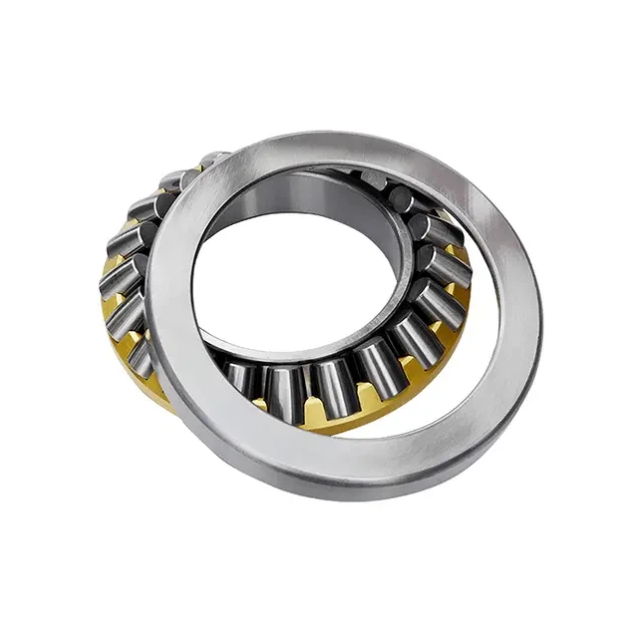
The load capacity of roller bearings is typically higher than that of ball bearings, due to the larger contact area between the rollers and the raceways. This makes roller bearings ideal for applications where heavy radial loads are common. For instance, cylindrical roller bearings are used in industrial machinery, while tapered roller bearings are preferred for automotive axles that experience both radial and axial loads.
Ball bearings, on the other hand, are generally used in applications where the load is lighter and speed is the primary concern. The load capacity of ball bearings is limited by the small point contact area, which increases the risk of wear and tear under heavy load conditions.
When it comes to speed, ball bearings have the edge. Their point contact design creates less friction, allowing for faster rotation with minimal heat generation. Ball bearings are commonly used in high-speed applications such as electric motors, fans, and hard drives. They excel in environments where rotational speed is more important than load capacity.
In contrast, roller bearings are better suited for medium-speed applications, as their line contact design generates more friction than ball bearings. While roller bearings can still operate at high speeds, they are generally not as efficient as ball bearings in this regard. However, their superior load-bearing capacity makes them the go-to choice for heavy-duty machinery.
Ball bearings tend to be smaller and lighter than roller bearings, making them ideal for compact and space-constrained applications. The smaller size of ball bearings allows them to fit into tight spaces without compromising performance, which is why they are commonly used in precision machinery and electronic devices.
Roller bearings, due to their larger rollers, are generally bulkier and heavier. While this design allows them to support heavier loads, it also makes them less suitable for applications where size and weight are critical factors. Roller bearings are typically used in industrial and automotive applications where space constraints are not as significant.
As mentioned earlier, roller bearings are more forgiving when it comes to misalignment. This ability to tolerate misalignment is particularly beneficial in heavy machinery and equipment that experiences vibrations, shifts in load, and other operational stresses. Ball bearings, however, are more sensitive to misalignment and require precise installation to prevent premature wear and damage.
Feature | Roller Bearing | Ball Bearing |
Contact Type | Line | Point |
Radial Load | High | Medium |
Axial Load | Varies | Can be good |
Speed Capability | Medium | High |
Typical Applications | Heavy machinery | Fast rotating parts |
Understanding when to use roller bearings and ball bearings depends largely on the specific requirements of your application. If your machinery is subject to high radial loads and requires durability under heavy pressure, roller bearings are the optimal choice. They are commonly used in industrial machinery, gearboxes, automotive axles, and construction equipment.
If your application demands high-speed rotation with minimal friction, ball bearings are likely the better choice. These bearings are ideal for high-velocity machinery, such as electric motors, turbines, and hard drives. Their ability to operate efficiently at high speeds makes them essential in precision equipment and consumer electronics.
The choice between roller bearings and ball bearings ultimately depends on the nature of the application. Roller bearings are best suited for heavy-duty, high-load environments, while ball bearings excel in applications requiring high-speed rotation with lower load demands. At WGB Bearing, we offer a comprehensive range of high-quality roller bearings designed to meet the demands of various industries. Our products provide the durability, efficiency, and performance needed to optimize your machinery and ensure long-lasting results.
For more information on our high-performance roller bearings, visit WGB Bearing Products or contact us today.
1. What are the key differences between roller bearings and ball bearings?
The main differences lie in their load capacity, speed capabilities, and tolerance to misalignment. Roller bearings support higher loads and are more durable under heavy-duty conditions, while ball bearings excel in high-speed applications with lower load requirements.
2. When should I use roller bearings instead of ball bearings?
Use roller bearings in applications where heavy radial loads are present, such as in industrial machinery and automotive axles. Opt for ball bearings in high-speed environments with lighter loads, such as in electric motors and precision machinery.
3. Can roller bearings handle axial loads?
Yes, certain types of roller bearings, such as tapered roller bearings, can handle both radial and axial loads simultaneously, making them suitable for applications like automotive axles.
4. How do I select the right bearing for my application?
Consider factors like load capacity, speed, size constraints, and misalignment tolerance. For heavy-duty applications, choose roller bearings, and for high-speed applications, choose ball bearings.