Call Us Today
Call Us Today
A Specialist on Spherical Roller Bearings Since 1969

- All
- Product Name
- Product Keyword
- Product Model
- Product Summary
- Product Description
- Multi Field Search


Views: 0 Author: Site Editor Publish Time: 2026-01-19 Origin: Site


Roller bearings are essential components used in numerous applications across various industries. These bearings help reduce friction, support heavy loads, and ensure smooth movement in mechanical systems. With their ability to carry large radial and axial loads, roller bearings are especially valuable in industries that require durability and precision under demanding conditions. WGB Bearing, a leading manufacturer in this field, produces a wide range of high-performance roller bearings designed for maximum reliability and longevity. This article will explain what roller bearings are, how they work, the different types of roller bearings, their importance in modern machinery, and the benefits they bring to various industries.
A roller bearing is a type of bearing that uses cylindrical, tapered, spherical, or needle-shaped rollers to carry radial and axial loads. The key function of roller bearings is to reduce friction between moving parts, which allows the machinery to operate more smoothly and efficiently. By facilitating smooth movement, roller bearings help prevent wear and tear, increase the lifespan of machinery, and improve overall system efficiency.
The main components of a roller bearing are the inner ring, outer ring, rollers, and cage. The inner and outer rings provide a surface for the rollers to rotate on, while the cage holds the rollers in place, preventing them from touching each other. This design ensures that the rollers rotate freely, reducing friction and supporting the load of the machinery.
WGB Bearing, with decades of experience, is renowned for producing high-quality roller bearings that are used in a variety of applications, from industrial machinery to automotive components. These bearings are engineered to perform under tough conditions, providing maximum load capacity and minimizing the need for maintenance.
The fundamental principle behind the functioning of roller bearings is rolling motion, which significantly reduces friction compared to sliding motion. Unlike ball bearings, which use point contact between the ball and raceway, roller bearings utilize line contact, which spreads the load over a larger area. This design allows roller bearings to carry much higher loads than ball bearings while maintaining smoother operation.
The primary difference between roller bearings and ball bearings lies in their contact types. In ball bearings, the rolling elements (balls) make point contact with the inner and outer raceways. This design allows for high-speed rotation but limits the bearing’s ability to handle heavy loads because the point contact generates more pressure in a smaller area. Conversely, roller bearings use cylindrical, tapered, or needle-shaped rollers that make line contact with the raceways. The increased contact area spreads the load across a larger surface, allowing roller bearings to handle much higher loads without compromising efficiency.
Friction is a primary cause of wear and tear in mechanical systems, leading to increased energy consumption and potential system failures. Roller bearings mitigate friction by replacing sliding contact with rolling contact. In a roller bearing, the rollers rotate within the inner and outer rings, which drastically reduces the resistance between moving parts. This reduction in friction not only increases the efficiency of the system but also minimizes the heat generated during operation, which can otherwise lead to premature component failure.
The ability of roller bearings to reduce friction also translates to significant energy savings. By reducing friction, less energy is required to move the machinery, resulting in improved operational efficiency and lower energy costs.
Cylindrical roller bearings are designed with rollers that are shaped like cylinders. These bearings are specifically designed for handling heavy radial loads and are commonly used in industrial machinery. Their ability to handle high radial loads makes them ideal for applications such as electric motors, gearboxes, and conveyors.
Cylindrical roller bearings can support heavy radial loads due to their large contact area, and they can operate at high speeds with minimal friction. However, they are not well-suited for handling axial loads, making them best suited for applications where only radial loads are involved.
Tapered roller bearings are designed with conical rollers that allow them to handle both radial and axial loads simultaneously. These bearings are widely used in automotive applications, such as wheel hubs and axles, where both radial and axial loads are present.
The tapered design of the rollers in this type of bearing allows them to effectively carry combined loads. Tapered roller bearings are particularly effective in applications where high load capacity and the ability to withstand thrust are required, such as in transmissions and differential gears.
Needle roller bearings are a type of roller bearing that uses long, thin cylindrical rollers. These bearings are used in applications where space is limited, and they offer a high load capacity relative to their size. Needle roller bearings are commonly used in automotive engines, gearboxes, and agricultural machinery.
Their compact design makes them ideal for use in smaller, more confined spaces where larger bearings may not fit. Despite their small size, needle roller bearings offer impressive load-bearing capabilities, making them suitable for applications that require both high radial load capacity and compactness.
Spherical roller bearings are designed with spherical-shaped rollers, which allow them to accommodate both radial and axial loads. These bearings are particularly useful in applications that involve heavy-duty operations, such as in mining equipment, construction machinery, and large industrial equipment.
The spherical design of the rollers in spherical roller bearings allows them to handle misalignment, which is common in heavy-duty applications. This misalignment tolerance helps improve the reliability and longevity of the bearing, making them a popular choice for demanding environments.
Bearing Type | Load Capacity | Axial Load Capability | Typical Use Case |
Cylindrical | High radial | Low | Industrial machinery |
Tapered | High radial & axial | Medium | Automotive axles |
Needle | High radial | Low | Compact spaces |
Spherical | Heavy radial | Medium | Heavy equipment |
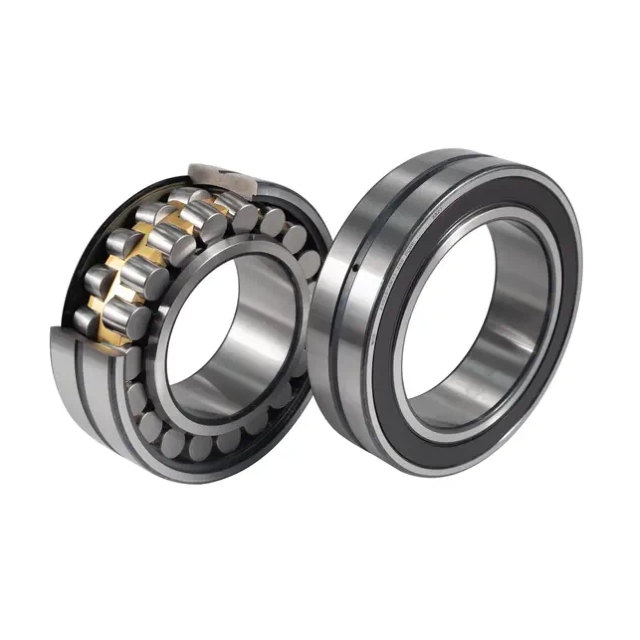
Roller bearings play an integral role in modern machinery by improving efficiency, load-bearing capacity, and durability. These bearings are used in a wide range of industrial applications, from automotive components to large-scale manufacturing machinery. Their ability to reduce friction and handle high loads makes them essential for smooth operation in demanding environments.
The ability of roller bearings to handle heavy loads while minimizing friction directly contributes to the overall efficiency of machinery. In industries such as automotive, construction, and manufacturing, where machines are required to operate continuously under high stress, roller bearings ensure that the machinery remains efficient and reliable. By using roller bearings, machines can operate smoothly with minimal energy consumption, resulting in increased productivity and reduced energy costs.
Roller bearings are built to withstand the rigors of heavy-duty operations. They are designed to operate in harsh environments and can endure exposure to dirt, dust, moisture, and high temperatures without compromising performance. This durability ensures that machinery remains operational for longer periods, reducing the need for frequent replacements and minimizing downtime. As a result, roller bearings contribute to the long-term reliability and cost-effectiveness of the equipment they are used in.
While roller bearings may come at a higher initial cost compared to ball bearings, their long lifespan and ability to handle higher loads result in significant cost savings over time. Fewer replacements, lower maintenance costs, and reduced downtime all contribute to the overall cost-effectiveness of roller bearings. In the long run, using high-quality roller bearings can help businesses save money and improve operational efficiency.
In conclusion, roller bearings are a critical component in modern machinery, providing improved load-bearing capacity, reduced friction, and enhanced efficiency. At WGB Bearing, we specialize in the production of high-performance roller bearings that are designed to meet the needs of a variety of industries, including automotive, manufacturing, and heavy equipment. Our roller bearings are engineered to provide exceptional performance under challenging conditions, ensuring durability and reliability.
If you're looking to improve the efficiency and longevity of your machinery, consider using WGB Bearing products. Our high-quality roller bearings are designed to meet the demands of modern industry, providing unmatched reliability and performance. For more information about our roller bearings, visit WGB Bearing Products or contact us today.
1. What is the primary advantage of roller bearings over ball bearings?
Roller bearings offer higher load capacity compared to ball bearings due to their line contact design, making them ideal for heavy-duty applications.
2. How do I know which type of roller bearing to use?
The type of roller bearing you choose depends on your specific application. For example, cylindrical roller bearings are best for radial loads, while tapered roller bearings can handle both radial and axial loads.
3. How can roller bearings improve machine efficiency?
By reducing friction and supporting heavier loads, roller bearings allow machines to run more smoothly, reducing wear and tear and increasing efficiency.
4. How often should roller bearings be replaced?
With proper maintenance, roller bearings can last for a long time. However, they should be inspected regularly for signs of wear or damage, especially in high-stress applications.