Call Us Today
Call Us Today
A Specialist on Spherical Roller Bearings Since 1969

- All
- Product Name
- Product Keyword
- Product Model
- Product Summary
- Product Description
- Multi Field Search


Views: 0 Author: Site Editor Publish Time: 2026-08-03 Origin: Site


Unplanned downtime in concrete production, aggregate processing, and heavy construction is disproportionately driven by premature rolling-element bearing failures. These mechanical halts often cost thousands per hour in lost yield. Standard open bearings in concrete mixers, crushers, and heavy machinery are highly susceptible to silica dust ingress. They also endure extreme dynamic shock loads from shifting materials and inevitable shaft deflection. These harsh conditions lead to rapid lubricant degradation and catastrophic spalling.
Transitioning from open to sealed spherical roller bearings addresses these specific failure modes directly. This guide provides a technical evaluation framework for specifying these bearings. It analyzes structural trade-offs and helps you select components that maximize Mean Time Between Failures (MTBF) in severe industrial environments.
Contamination Control: Integral contact seals physically block abrasive silica dust and moisture, extending lubricant life and preventing premature raceway wear in construction and mining environments.
Misalignment and Mounting Error Tolerance: The double-row, sphered outer ring design naturally compensates for up to 2 degrees of shaft deflection and mounting inaccuracies without increasing edge loading or friction.
Retrofit Considerations: Upgrading to sealed bearings requires verifying housing dimensions, as sealed variants may have slightly wider profiles or specific speed limitations compared to open counterparts.
Heavy construction sites and aggregate plants present some of the most hostile operating conditions for rotating equipment. Evaluating bearing performance requires a clear understanding of the specific environmental stressors that destroy standard components. You cannot specify a bearing based solely on static load ratings when the machine operates in a quarry or a batch plant.
Establishing baseline MTBF expectations is the first step in component selection. Maintenance engineers must track the lifespan of existing open bearings to quantify failure rates. Success in concrete equipment applications means extending maintenance intervals from weeks to months or years. It also requires eliminating mid-shift catastrophic failures that halt entire production lines. Identifying the primary environmental stressors—whether particulate contamination, high-amplitude vibration, or structural flexing—dictates the exact bearing specifications required for the application. You must measure the vibration signatures and track the exact failure modes of the outgoing bearings to set a realistic baseline.
Abrasive concrete dust acts as a highly effective lapping compound when it breaches standard bearing housings. Airborne silica particles are often smaller than 5 microns, allowing them to easily bypass standard labyrinth seals on plummer block housings. Once these particles enter an open bearing, they mix with the base oil and thickener of the lubricating grease. This creates a destructive abrasive paste. This paste accelerates abrasive wear on the rolling elements and raceways, destroying the internal geometries of the bearing. As the internal clearance increases due to this wear, the bearing loses its ability to guide the shaft accurately. This leads to increased vibration, cage pocket wear, and eventual catastrophic cage failure.
Construction machinery rarely operates under steady-state conditions. Equipment faces continuous, high-amplitude vibration and unpredictable, asymmetrical stress. Uneven material feeding in crushers or shifting loads in concrete mixers generate severe shock loads. For example, when a jaw crusher encounters a piece of tramp iron, the instantaneous load spikes massively. These dynamic forces can rupture the elastohydrodynamic lubricant film in standard bearings, causing metal-to-metal contact. Bearings must possess high dynamic load ratings to absorb these impacts without suffering permanent plastic deformation, known as brinelling, on the raceways.
Structural flexing is inevitable in heavy machinery frames. When a wheel loader dumps tons of raw aggregate into a hopper, the supporting steel structures bend. This structural deflection creates angular misalignment between the rotating shaft and the stationary bearing housing. Furthermore, mounting errors during field maintenance, such as uneven tightening of base bolts or settling of the foundation, often exacerbate this misalignment. Rigid bearings bind and suffer from severe edge loading under these conditions. This edge loading generates excessive heat, breaks down the grease, and leads to rapid fatigue spalling along the edges of the roller paths.
Upgrading machinery requires components specifically engineered to handle combined environmental and mechanical threats. Integrating sealed spherical roller bearings for concrete equipment provides a robust defense against the primary causes of premature failure. These units combine the heavy load capacity of a spherical roller bearing with the contamination resistance of a sealed unit.
Integrally sealed designs feature factory-installed contact seals that ride directly on the inner ring of the bearing. These seals maintain a physical barrier against external abrasives far better than external housing seals alone. The seal lip applies a specific, calculated contact pressure against the inner ring, preventing dust ingress while minimizing friction. The factory-filled grease acts as a secondary barrier, trapping any microscopic particles that might bypass the primary seal lip. This internal sealing mechanism ensures the rolling elements operate in a clean environment, drastically reducing abrasive wear and extending the operational life of the unit.
The internal geometry of these bearings manages dynamic misalignment effectively. They feature a double row of barrel-shaped rollers guided by a common sphered outer raceway. This design allows the inner ring and roller assembly to pivot freely within the outer ring. This kinematic freedom permits rotation with low friction even under severe structural flexing. The bearing naturally compensates for shaft deflection without inducing destructive edge stresses on the rollers. You can run a misaligned shaft up to 2 degrees off-center without compromising the load-carrying capacity or generating excess heat.
Heavy radial and axial loads are constant in crushing, mixing, and material handling operations. The high load-carrying capacity of double-row spherical rollers distributes these heavy loads across a large contact area. The symmetrical rollers self-adjust to distribute the load evenly along their length, maintaining full line contact with the raceways. This optimized load distribution prevents localized stress concentrations during high-impact events, ensuring stable operation during aggressive material processing. The ability to handle combined radial and axial loads makes them ideal for applications like inclined conveyors and vibrating screens.
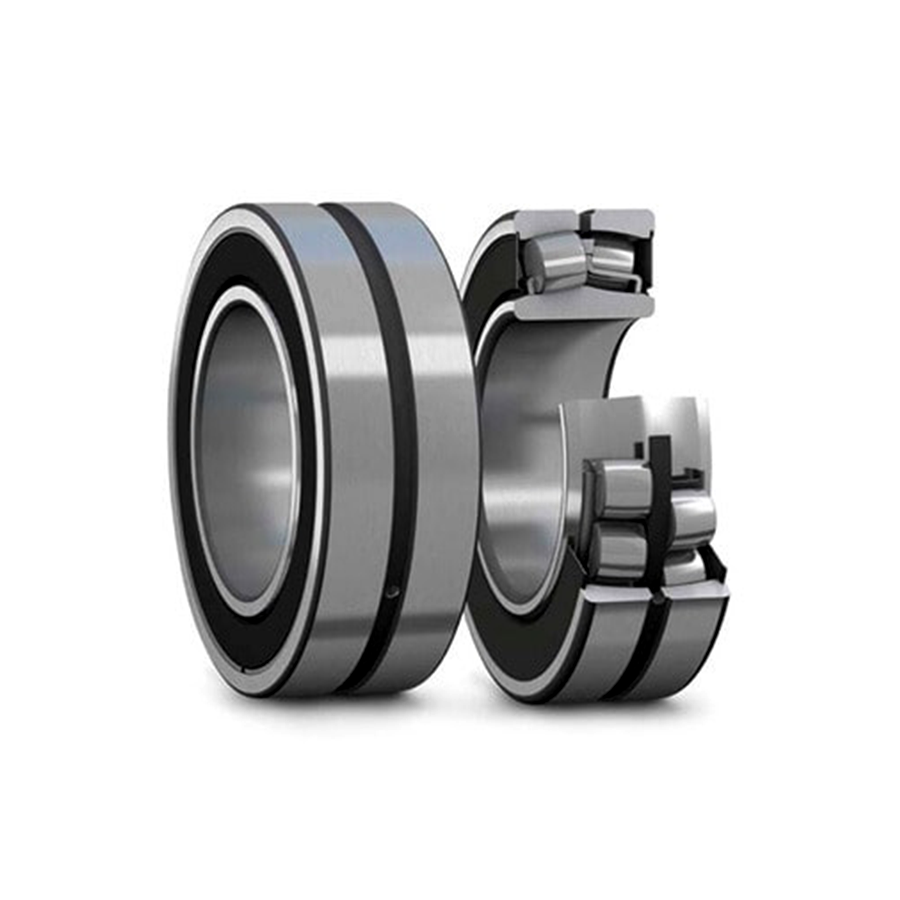
Selecting the correct sealed bearings for construction machinery requires analyzing several technical parameters. Engineers must match the internal specifications of the bearing to the exact demands of the application. You cannot simply pull a bearing off the shelf based on shaft diameter alone.
The effectiveness of the integral seal depends heavily on the elastomer material. Nitrile Butadiene Rubber (NBR) is the standard choice for most construction applications. It offers excellent abrasion resistance and performs well in typical ambient temperatures. However, high-temperature or chemically aggressive environments require Fluoroelastomers (FKM). FKM seals withstand extreme heat generated by heavy friction and resist degradation from synthetic lubricants or harsh cleaning agents used in concrete washdown areas.
Seal Material | Temperature Range | Abrasion Resistance | Best Application Use Case |
|---|---|---|---|
Nitrile Rubber (NBR) | -40°C to +120°C | Excellent | Standard concrete mixers, conveyors, general construction equipment. |
Fluoroelastomer (FKM) | -30°C to +250°C | Good | High-friction crushers, asphalt machinery, high-temperature zones. |
Hydrogenated Nitrile (HNBR) | -40°C to +150°C | Very Good | Heavy-duty pumps, synthetic lubricant environments. |
Radial internal clearance determines how much the inner ring can move relative to the outer ring before installation. Concrete equipment typically requires C3 or C4 clearance. These larger clearances accommodate the thermal expansion of the inner ring caused by heavy operational friction. If you use a standard CN clearance bearing in a hot crusher, the inner ring will expand, eliminate the clearance, and cause the bearing to seize. Selecting the correct cage design is equally critical. Machined brass cages offer superior resistance to extreme vibration and shock loads compared to standard stamped steel cages. Brass cages also provide better emergency running properties if lubrication fails momentarily.
Sealed bearings arrive pre-lubricated with precise factory grease fill volumes, typically between 30% and 40% of the free internal space. This controlled fill prevents the churning and overheating associated with over-greasing. The integral seals retain the lubricant directly at the rolling contact zones. This retention drastically reduces required relubrication cycles. Construction machinery requires specific grease formulations, typically featuring extreme pressure (EP) additives, lithium complex thickeners, and high-viscosity base oils, to maintain a protective film under heavy shock loads.
Different types of construction equipment impose unique stresses on rotating components. Bearing selection must align with the specific kinematic and load profiles of the machinery. A bearing that works perfectly on a conveyor tail pulley will fail instantly on a shaker screen.
Jaw and cone crushers represent the most brutal applications for rotating components. Specifying a spherical roller bearing for crushers requires focusing on extreme shock load absorption. These bearings need massive dynamic load ratings to survive the continuous impact of crushing rock. Vibration-resistant cage structures, typically machined brass, are mandatory to handle the violent, dynamic load changes. The bearings must also accommodate significant shaft deflection as the heavy eccentric shafts bend during the crushing cycle. You must ensure the bearing can handle the high radial loads generated by the pitman arm while maintaining precise alignment.
Concrete mixers and pumps operate in low-speed, high-torque environments. Continuous heavy radial loads and severe cement dust exposure are the primary failure drivers here. Bearings in these applications do not require extreme speed ratings. Instead, they need maximum sealing efficiency to block the fine, abrasive cement powder. High-viscosity grease formulations are necessary to maintain a thick elastohydrodynamic lubrication film at low rotational speeds. The drum rollers on a mixer truck, for example, endure constant shock from uneven roads while rotating slowly under immense weight.
Vibratory applications intentionally generate high-frequency vibration to sort materials or compact soil. Bearings in vibratory screens require specialized internal tolerances to prevent the rollers from skidding against the raceways during the rapid acceleration phases. These bearings often feature surface-treated rollers and enhanced cage guidance systems, typically guided by the outer ring to prevent cage fracture. The internal clearance must be carefully calculated to account for the rapid heat generation inherent in high-frequency vibratory applications, often requiring C4 clearance as a minimum standard.
Procurement decisions in heavy industry must look beyond the initial purchase price. Evaluating the long-term operational impact of sealed bearings reveals significant financial and operational advantages. The goal is to maximize uptime and reduce the continuous drain on maintenance resources.
Sealed variants carry a higher initial procurement cost than standard open bearings. However, this upfront premium is quickly offset by operational savings. Facilities calculate long-term value based on drastically reduced grease purchasing volumes. An open bearing might require 50 grams of grease every week, whereas a sealed bearing can often run for months on its factory fill. Eliminating manual greasing labor frees maintenance personnel for more critical tasks. Most importantly, avoiding unexpected production halts saves thousands of dollars per hour in lost output. The long-term value heavily favors sealed designs in high-contamination environments.
Installing rigid bearings requires precise alignment procedures using dial indicators and laser alignment tools. This process is time-consuming and requires specialized labor. The inherent tolerance for mounting errors in self-aligning bearings reduces installation time significantly. Field replacements happen faster, getting the machinery back into production with fewer specialized tools and lower labor costs. You do not need to spend hours shimming base plates to achieve perfect angular alignment when the bearing itself compensates for the structural variations.
Engineers must address physical width differences when upgrading equipment. Integrally sealed bearings are sometimes slightly wider than their open counterparts to accommodate the seal structure. You must evaluate whether a sealed bearing will fit into an existing standard block housing without modification. In some cases, specialized narrow-profile sealed bearings are required to match standard ISO dimension series exactly. Always measure the housing depth and the shaft seating length before specifying a sealed replacement for an open bearing.
Contact seals generate friction as they rub against the inner ring. This friction produces heat during operation. Consequently, sealed bearings have lower maximum limiting speeds compared to open designs. Engineers must verify that the operational speed of the concrete equipment falls well within the thermal speed rating of the sealed bearing. Exceeding these speed limits will melt the seal lip, degrade the grease rapidly, and lead to premature failure. You must calculate the thermal equilibrium of the application to ensure the bearing will not overheat during continuous operation.
Executing a bearing upgrade program requires careful planning. Improper installation or maintenance practices can negate the benefits of sealed components. You must train your maintenance staff on the specific handling requirements of sealed units.
Upgrading existing equipment requires step-by-step verification. Maintenance teams must follow strict protocols to ensure a successful retrofit.
Measure the existing housing width to confirm the sealed bearing will fit without binding against the end covers.
Inspect the shaft for fretting wear or undersized dimensions. A loose shaft fit will cause the inner ring to spin, generating heat and destroying the shaft.
Verify the housing tolerances for out-of-roundness, which can pinch the outer ring and eliminate internal clearance.
Ensure the seal lip contact zones on the inner ring are free from damage or heavy corrosion before installation.
Disable or cap off any automatic greasing lines connected to the housing to prevent accidental over-pressurization.
Applying traditional relubrication schedules to sealed bearings is highly dangerous. Standard open bearings require frequent, large-volume grease purging to push contaminants out of the housing. Pumping high-pressure grease into a sealed bearing creates hydraulic pressure. A standard grease gun can generate upwards of 10,000 psi, while the seal lip can only withstand a few psi. This pressure will blow the integral seals out of their grooves, destroying the bearing's primary defense mechanism. Facilities must establish strict, low-volume relubrication protocols specifically designed for sealed units, or eliminate relubrication entirely if the application allows.
Sourcing reliable components is critical for heavy industry. When selecting a bearing supplier for concrete equipment, evaluate their inventory availability to prevent long lead times during breakdowns. Assess their application engineering support capabilities. A strong supplier provides on-site troubleshooting, vibration analysis, and exact clearance recommendations based on your specific machinery. Furthermore, strict counterfeit prevention protocols and comprehensive failure analysis capabilities are mandatory for Tier-1 suppliers. You need a partner who can analyze a failed bearing and tell you exactly why it failed, rather than just selling you a replacement.
Audit your existing rotating equipment to identify the highest-frequency failure points caused by contamination or misalignment.
Select a pilot machine, such as a primary jaw crusher or a high-use concrete mixer, for an initial sealed bearing retrofit.
Update your maintenance standard operating procedures to explicitly forbid high-pressure greasing on the newly installed sealed units.
Track the MTBF and overall grease consumption on the pilot machine over a 6-month period to quantify the operational savings.
Partner with a specialized bearing supplier to verify exact sizing, width constraints, and internal clearance specifications before executing a plant-wide upgrade.
A: An open bearing has exposed rollers and raceways, relying entirely on external housing seals to keep contaminants out. A sealed spherical roller bearing features factory-installed contact seals integrated directly into the bearing itself. This provides a physical barrier against dust and moisture while retaining the factory grease fill directly at the rolling elements.
A: Often, yes. However, you must verify the width dimensions. Some sealed bearings are slightly wider than open bearings in the same ISO series to accommodate the seals. Always check the housing depth and shaft length to ensure the sealed variant fits without binding against the housing covers.
A: They utilize a double row of barrel-shaped rollers that run on a common, sphered outer raceway. This internal geometry allows the inner ring and roller assembly to pivot freely within the outer ring. This naturally compensates for up to 2 degrees of shaft deflection or mounting misalignment without increasing friction.
A: The self-aligning capability prevents edge loading on the rollers during structural flexing. By distributing heavy radial and axial loads evenly across the large contact area of the symmetrical rollers, the bearing prevents localized stress concentrations. This allows smooth, low-friction rotation even during severe impacts.
A: Relubrication intervals are significantly longer for sealed bearings compared to open designs. While open bearings might require weekly greasing in dusty environments, sealed bearings often run for months or even their entire service life without relubrication. This depends heavily on the operating temperature and rotational speed.
A: Heavy loads and friction in concrete equipment generate significant heat, causing the bearing's inner ring to expand. C3 or C4 internal clearances provide extra space between the rollers and raceways at room temperature. This prevents the bearing from preloading and seizing tight when it reaches high operating temperatures.