Call Us Today
Call Us Today
A Specialist on Spherical Roller Bearings Since 1969

- All
- Product Name
- Product Keyword
- Product Model
- Product Summary
- Product Description
- Multi Field Search


Views: 0 Author: Site Editor Publish Time: 2026-08-28 Origin: Site


Heavy industrial applications expose rotating equipment to severe environmental hazards. Open spherical roller bearings fail prematurely in these settings due to particulate contamination and inadequate relubrication practices. Dirt and moisture ingress destroy rolling elements and raceways. This damage drives up maintenance labor and forces destructive, time-consuming bearing removals. Continuous greasing systems require constant monitoring. Manual lubrication demands heavy labor hours. Environmental cleanup from purged grease adds unnecessary operational overhead. Unplanned downtime disrupts production schedules and impacts overall facility output.
Facility managers and reliability engineers must evaluate better contamination control methods. The decision to replace open spherical roller bearing with sealed variants offers a practical engineering solution. This transition is not a simple part swap. It is a calculated technical upgrade. You must perform specific housing, clearance, and thermal evaluations to optimize maintenance intervals. Understanding the mechanical trade-offs ensures the upgraded bearing performs reliably under existing operational loads.
Contamination Control vs. Speed Limits: Sealed bearings drastically reduce contamination risks and grease consumption, but the added seal friction lowers the maximum permissible operating speed compared to open variants.
Housing Tolerances are Critical: Direct retrofits require strict verification of sealed bearing housing compatibility, specifically regarding seal protrusion and existing grease purge paths.
Thermal Dynamics Alter Clearance Needs: The internal friction generated by integral seals increases operating temperatures, often necessitating a shift to a larger internal clearance class (e.g., moving from Normal to C3).
Installation Requires Precision: Upgrading mandates a strict sealed bearing retrofit checklist, including verifying 10° to 15° shaft lead chamfers to prevent seal lip damage during mounting and ensuring factory grease is never washed out.
A bearing retrofit requires establishing clear baseline metrics before making any mechanical changes. Engineers must track the current Mean Time Between Failures (MTBF) for the open bearings. You should document the exact frequency of manual lubrication routes. Calculate the volume of grease consumed and disposed of monthly. The goal of upgrading to a sealed design is to extend the MTBF. You want to optimize maintenance intervals by eliminating daily or weekly greasing tasks. A successful transition drastically reduces the volume of grease purchased and the labor hours spent applying it to the equipment.
Manual lubrication introduces variables into equipment maintenance. Maintenance technicians often over-grease open bearings. This practice blows out external housing seals and causes severe overheating as the bearing churns excess lubricant. Under-greasing leads to metal-to-metal contact and rapid raceway spalling. Factory-filled sealed bearings eliminate these human errors entirely. Manufacturers fill these bearings with the exact proper lubricant volume and type under cleanroom conditions. The internal grease volume is precisely calculated to provide optimal hydrodynamic films without causing excessive churning friction.
Open bearings operating in highly contaminated environments face a high risk of catastrophic failure. Abrasive particles mix with the grease to form a grinding paste. This paste wears down the rollers and the brass or steel cages. Eventually, the internal geometry collapses. The bearing can fuse directly to the shaft. Removing a fused bearing requires destructive, time-consuming dismounting methods. Technicians often resort to cutting torches or heavy hydraulic pullers. Sealed bearings block the initial ingress of these abrasive particles. This protection prevents the chain reaction of wear that leads to catastrophic shaft seizures.
Certain operational conditions heavily favor sealed designs over open alternatives. Mining conveyors operate in constant dust and grit. Aggregate crushers expose bearings to heavy shock loads and abrasive rock dust. Textile machinery generates fine lint that easily bypasses standard housing seals and wicks oil away from open bearings. High-dust environments overwhelm traditional labyrinth seals on plummer blocks. In these specific applications, the integral contact seals of the bearing provide a secondary line of defense. The sealed design outperforms open configurations by maintaining a clean internal operating environment regardless of external conditions.
Failure Modes: Open vs. Sealed Bearings in Contaminated Environments | ||
Failure Mode | Open Bearing Vulnerability | Sealed Bearing Mitigation |
|---|---|---|
Abrasive Wear | High. Dust mixes with grease to form lapping compound. | Low. Integral seals block particulate ingress. |
Lubricant Starvation | High. Relies entirely on manual or auto-lube systems. | Low. Factory-filled with calculated grease volume. |
Over-Pressurization | High. Excess grease blows out housing seals. | None. Designed to operate without relubrication. |
Moisture Corrosion | High. Water washes away external grease barriers. | Medium. Contact seals repel splashing water and humidity. |
Engineers must carefully evaluate sealed bearing housing compatibility before initiating a retrofit. ISO boundary dimensions dictate that the bore, outside diameter, and overall width generally match between open and sealed versions of the same series. A 22216 open bearing has the same basic envelope as a 22216 sealed bearing. However, the internal geometries and face profiles differ. The sealed variant must accommodate the rubber seal and its retaining snap ring. This requirement alters the internal cage design and the available space for the rolling elements. You must verify that the housing can accept these subtle profile differences without interference.
Integral seals frequently protrude slightly beyond the bearing side faces. This protrusion is a mechanical detail you cannot ignore. Open bearings have flat, flush side faces that sit cleanly against housing shoulders or spacing collars. If you install a sealed bearing without checking for protrusion, the rubber seal lip may rub directly against the stationary housing shoulder. This rubbing generates extreme heat, melts the seal, and destroys the bearing within hours. You must measure the exact seal protrusion using the manufacturer's technical drawings. If protrusion exists, you may need to machine a slight undercut into the housing shoulder or install a custom spacer ring to provide adequate running clearance.
Fitting sealed bearings into standard split plummer or pillow block housings requires specific modifications. Standard housings feature drilled and tapped holes for grease fittings. They also include grease purge ports at the base. When you install a sealed bearing, you must modify or permanently block these existing grease fittings. If you leave the fittings active, maintenance staff will inevitably pump grease into the housing out of habit. This external grease will build up pressure against the bearing's integral seals. The pressure will eventually push the integral seal inward, forcing it into the rotating cage and causing immediate failure. You must plug all external grease paths and clearly tag the housing as containing a sealed, lubricated-for-life component.
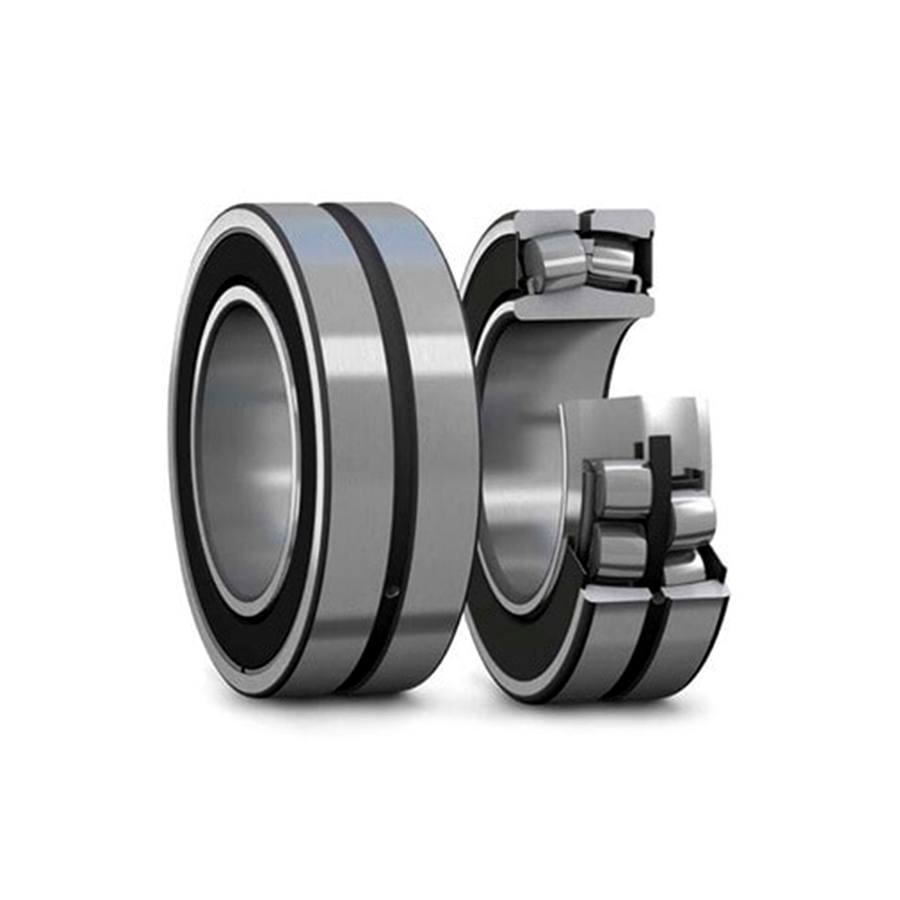
Contact seals change the thermal dynamics of the rotating assembly. The rubber seal lip maintains constant physical contact with the inner ring to keep contaminants out. This continuous rubbing generates additional friction. Consequently, sealed bearings operate at higher baseline temperatures compared to open bearings running under the exact same loads and speeds. You must account for this friction-induced heat during the engineering review. The higher operating temperature causes the inner ring to expand more than it would in an open configuration. If you ignore this thermal expansion, the internal clearance will disappear, leading to severe preloading and rapid bearing failure.
You must establish a framework for evaluating clearance changes before ordering replacement parts. Radial Internal Clearance (RIC) is the total distance one bearing ring can move relative to the other in the radial direction. If the original application ran an open bearing with a Normal (CN) clearance class, the sealed version will likely require a larger clearance. The higher operating temperature of the sealed design demands more room for thermal expansion. You will often need to specify a C3 or even a C4 clearance class. Upgrading the clearance prevents the rolling elements from binding tightly between the inner and outer raceways as the system reaches its steady-state operating temperature.
Clearance and Temperature Comparison: Open vs. Sealed | ||||
Bearing Type | Friction Level | Typical Operating Temp | Recommended Clearance Class | Relubrication Need |
|---|---|---|---|---|
Open Spherical Roller | Low (Rolling only) | Base Ambient + Load Heat | Normal (CN) or C3 | High / Continuous |
Sealed Spherical Roller | Medium (Rolling + Seal Lip) | Base + Load Heat + Seal Friction | C3 or C4 | None / Minimal |
The operating environment dictates the required seal material. Standard sealed spherical roller bearings utilize Nitrile Butadiene Rubber (NBR) seals. NBR provides excellent resistance to standard mineral oils and greases. However, NBR seals have a strict thermal limit of approximately 120°C (248°F). If the application temperature exceeds this threshold, the NBR material hardens, cracks, and fails. For higher temperature applications, you must specify Fluoroelastomer (FKM) seals. FKM seals can withstand continuous operating temperatures up to 250°C (482°F). You must weigh the higher upfront cost of FKM seals against the operational necessity of surviving elevated temperatures without degrading.
Manufacturers supply sealed spherical roller bearings lubricated for the expected life of the internal grease. This pre-lubricated state introduces specific constraints. The factory grease serves a dual purpose. It provides the necessary hydrodynamic film for the heavy steel rollers. It also lubricates the rubber seal lip itself. The seal lip must ride on a microscopic film of oil bleeding from the grease. If the internal grease dries out or degrades, the seal lip will run dry against the inner ring. Dry running causes immediate seal wear and burning. You must ensure the chosen bearing grease matches the operational speeds and loads to maintain this seal lip lubrication.
Engineers must carefully evaluate speed ratings when retrofitting. The limiting speed of a sealed bearing is lower than that of an open bearing of the same size. Contact seal friction generates heat that increases exponentially with rotational speed. You must verify that the application's maximum shaft speed does not exceed the seal's kinematic limits. Check the manufacturer's catalog for the specific limiting speed of the sealed variant. Do not rely on the thermal reference speed of the open bearing. If the shaft speed exceeds the sealed bearing's limits, the seal lip will overheat, melt, and destroy the lubricant.
Traditional maintenance cultures hold a strong bias toward greasable open bearings. Many technicians believe that pumping fresh grease into a housing is the only way to ensure equipment longevity. You must clarify when open bearings are still required and when sealed bearings offer a superior choice. Open bearings remain necessary for extreme high-speed applications where seal friction is unacceptable. They are also required in continuous high-heat environments where grease degrades rapidly and must be physically purged and replaced. For low-to-medium speed applications in highly contaminated environments, sealed bearings consistently outperform open designs by blocking the root cause of the wear.
Some sealed spherical roller bearings feature external relubrication features, such as a W33 annular groove and three lubrication holes on the outer ring. This design confuses many maintenance teams. You must clarify the specific procedures for these bearings. They are designed to operate without relubrication in most standard applications. If the operating conditions are exceptionally severe, you can perform low-volume relubrication. This process requires extreme caution. You must pump the grease very slowly while the bearing is rotating. Pumping too fast or using too much volume will blow the integral rubber seals completely out of their seating grooves, ruining the bearing.
Proper preparation prevents premature failures during the installation process. You must follow a strict sealed bearing retrofit checklist to ensure success.
Wipe away all factory anti-corrosion agents from the bearing's outer seating and inner bore contact surfaces using a clean, lint-free cloth.
Strictly prohibit any washing of the bearing itself. Washing introduces solvents into the internal cavity and destroys the carefully calibrated factory grease fill.
Inspect the shaft and the housing bore for proper lead chamfers. You must verify a 10° to 15° lead chamfer exists. Sharp edges will roll, tear, or cut the rubber seals during insertion.
Measure the shaft and housing dimensions with a micrometer to ensure they remain within the required ISO tolerance bands. Worn shafts will cause the inner ring to spin.
Mounting sealed bearings requires different techniques than mounting open bearings. Technicians often heat open bearings extensively using oil baths or open flames to expand the inner ring for easy shaft mounting. You cannot use these methods on sealed bearings. High heat will melt the internal grease and permanently damage the rubber seals. You must use a temperature-controlled induction heater. Set the maximum heating temperature strictly below the thermal limit of the seal material and the grease dropping point. Typically, you should never heat a sealed bearing with NBR seals above 90°C (194°F). Always use the induction heater's temperature probe on the inner ring to monitor the process accurately.
You must plan for future dismounting during the initial retrofit. Sealed designs impact the types of dismounting tools you can use. You must ensure that pulling forces are never transmitted through the rubber seals or the rolling elements. If you use mechanical jaw pullers, the jaws must grip the inner ring directly. If the housing design prevents access to the inner ring, you must use hydraulic nuts or oil injection methods to expand the inner ring and break the interference fit. Pulling on the outer ring of a sealed bearing will force the rollers against the raceways, causing immediate brinelling damage and destroying the seals.
Choosing the right sealed spherical roller bearing supplier requires looking beyond the initial unit price. You must evaluate their application engineering support capabilities. A direct retrofit often requires complex calculations regarding altered internal clearances, adjusted speed limits, and modified housing tolerances. A qualified supplier will provide direct access to application engineers who can run these calculations for your specific equipment. They should offer detailed technical drawings that clearly show seal protrusion dimensions. Relying on a supplier without robust engineering support increases the risk of specifying the wrong clearance class or exceeding the thermal limits of the seal material.
Industrial facilities cannot afford extended downtime waiting for specialized replacement parts. When you transition to sealed bearings, you must discuss inventory strategies with your supplier. Standardize on specific seal materials and specific clearance classes across your facility. This standardization reduces the number of unique SKUs you need to stock. Verify the supplier's standard lead times for these specific configurations. Sealed bearings in larger bore sizes or with specialized high-temperature grease fills may not be standard off-the-shelf items. Your supplier must demonstrate the ability to maintain adequate local stock to support your operational needs.
The industrial bearing market faces challenges with counterfeit products. Counterfeit sealed bearings are particularly dangerous. They often feature substandard rubber seals that degrade rapidly and cheap internal grease that separates under load. You must advise your procurement team on the strict risks of purchasing from unauthorized distributors. Emphasize the need for verifiable supply chains when sourcing rotating equipment components. Demand certificates of conformance and origin from your supplier. Only purchase bearings through manufacturer-authorized distribution channels to guarantee you are receiving authentic products with the correct internal geometries and factory-specified lubricants.
Replacing open spherical roller bearings with sealed versions extends equipment service life. This upgrade eliminates human error in lubrication and blocks the abrasive contamination that destroys rolling elements. Success depends entirely on respecting the mechanical trade-offs. You must account for the lower speed limits caused by seal friction and the higher operating temperatures that demand larger internal clearances.
The shortlisting logic for this upgrade relies on three non-negotiable checks. First, you must verify housing clearance to accommodate seal protrusion. Second, you must recalculate the internal clearance to handle higher operating temperatures. Third, you must verify that your maximum shaft speed falls safely below the sealed bearing's limiting speed.
Take the following actions to initiate your bearing upgrade program:
Audit your facility to identify the highest-failure open bearing applications operating in heavily contaminated environments.
Calculate the current operational downtime and manual labor hours spent greasing these specific problem assets.
Consult with a certified bearing application engineer to review your existing housing drawings for seal protrusion compatibility.
Update your maintenance standard operating procedures to permanently plug grease fittings on newly retrofitted sealed housings.
A: Yes. ISO boundary dimensions generally allow sealed bearings to fit into standard split housings. However, you must evaluate the seal protrusion to prevent interference with housing shoulders. You must also permanently block existing grease ports to prevent accidental over-pressurization by maintenance staff.
A: Yes. The contact friction between the rubber seal lip and the inner ring generates significant heat. This friction reduces the maximum permissible operating speed by 20% to 50% compared to an open bearing, depending on the specific seal design and material.
A: While some sealed bearings feature a W33 lubrication groove and holes, they are designed to operate without relubrication. If extreme conditions require relubrication, you must pump a very small volume of grease slowly while rotating to avoid blowing out the integral seals.
A: Sealed bearings run hotter than open bearings due to seal lip friction. This higher operating temperature causes the inner ring to expand more. Upgrading to a larger clearance class, such as C3, prevents the bearing from preloading and seizing during operation.
A: Washing a sealed bearing destroys it. Solvents will penetrate the rubber seals, wash away the precisely calibrated factory grease fill, and degrade the seal material. You should only wipe the anti-corrosion oil off the outer and inner mounting surfaces.
A: Yes, but with strict temperature limits. You must keep the induction heater temperature below the thermal limit of the rubber seals and the grease dropping point. For standard NBR seals, never heat the bearing above 90°C (194°F).