Call Us Today
Call Us Today
A Specialist on Spherical Roller Bearings Since 1969

- All
- Product Name
- Product Keyword
- Product Model
- Product Summary
- Product Description
- Multi Field Search


Views: 0 Author: Site Editor Publish Time: 2026-07-03 Origin: Site


Heavy-duty industrial applications demand highly reliable components to maintain continuous operations. You need parts engineered specifically to endure extreme mechanical stress. A spherical roller bearing steps up to accommodate heavy radial loads and moderate axial loads. It actively compensates for continuous shaft misalignment during operation. Despite this robust design, premature failure plagues many critical operations. Unplanned downtime creates massive production bottlenecks across entire facilities. Maintenance labor demands skyrocket in harsh environments like mining, aggregate, and paper processing. You must transition from reactive troubleshooting to proactive root-cause analysis to protect operations. We will explore standard failure modes alongside verifiable preventative measures. You will learn strict evaluation criteria for selecting the best replacement components.
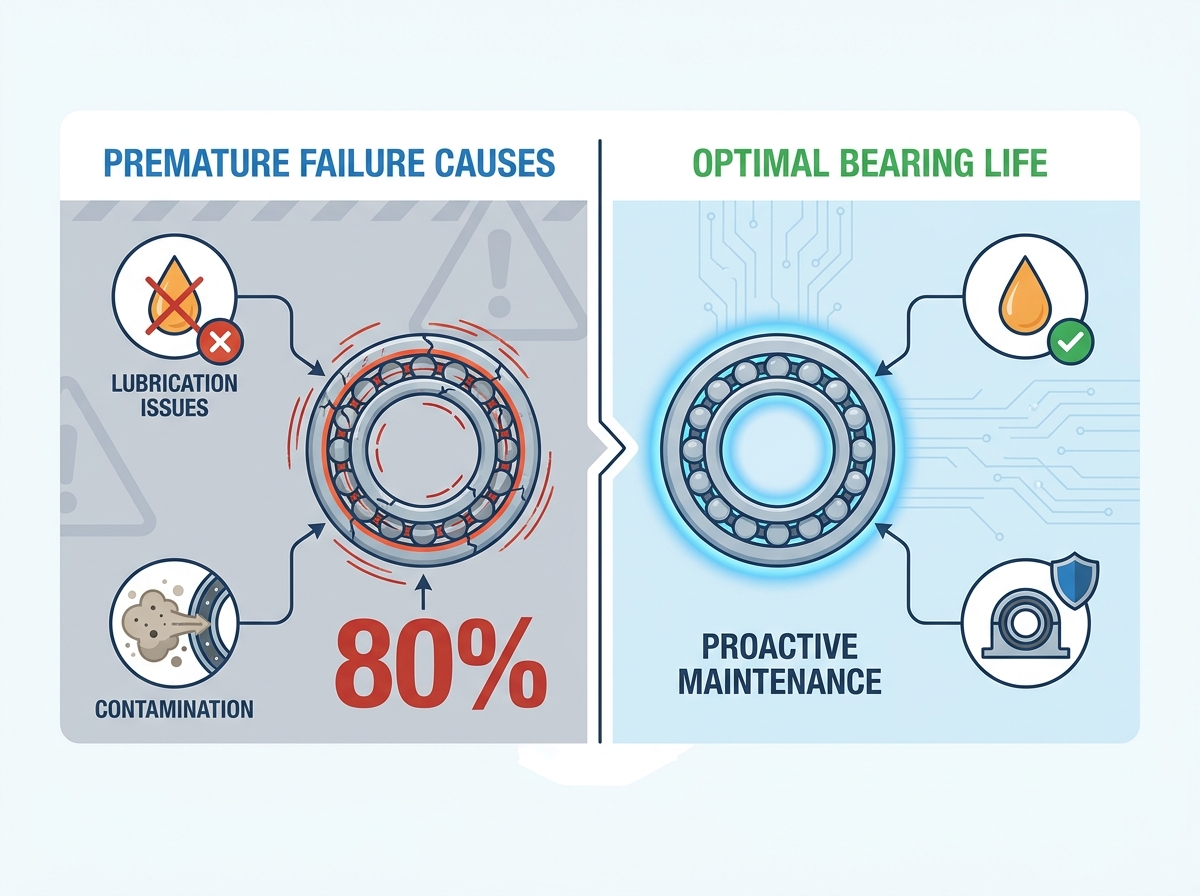
Up to 80% of premature spherical roller bearing failures stem from lubrication issues and solid contamination, not material fatigue.
Improper mounting—specifically over-tightening on a tapered journal—is a leading cause of internal clearance loss and rapid thermal failure.
Transitioning to sealed spherical roller bearings can drastically reduce contamination risks but requires evaluating speed and temperature trade-offs.
Evaluating failure requires a standardized diagnostic framework (e.g., ISO 15243) to separate operational symptoms from underlying mechanical root causes.
When heavy rotating equipment stops, entire production lines freeze immediately. The hourly cost of halted production far outweighs standard component prices. A replacement unit costs mere fractions compared to emergency labor and lost output. We see this disparity consistently across industrial manufacturing sectors. Production managers often underestimate the cascading effects of a single locked rotor.
Safety and compliance add further layers of operational risk. Unplanned catastrophic failures introduce severe safety hazards to plant personnel. Broken housings can eject metal shrapnel directly into operator walkways. Sudden grease purging creates dangerous slip hazards around the machinery. Toxic lubricant leaks frequently trigger strict environmental compliance violations.
Many facilities still rely on a reactive run-to-failure approach. This mindset represents a dangerous operational fallacy. Running high-capital equipment until it breaks destroys peripheral machine components. Damaged shafts and warped housings require expensive, time-consuming repairs. Contrast this method against modern condition-based monitoring strategies. Monitoring prevents secondary damage by catching anomalies early. You preserve machine life and schedule necessary repairs during planned maintenance outages.
Incorrect lubrication destroys rolling elements rapidly. Operators often select incorrect viscosity grades for specific operating temperatures. Incompatible grease thickeners mix inside the housing and harden unexpectedly. This hardening prevents base oil from reaching the rolling contacts. Failing to account for high operating temperatures leads directly to metal-to-metal contact.
You can identify lubrication starvation through distinct visual evidence. Look for these specific physical indicators during teardowns:
Discoloration appears as blue or brown tinting on inner rings.
Micro-spalling develops rapidly across the rolling elements.
Cage wear accelerates due to increased sliding friction.
Abrasive particles and water constantly threaten industrial machinery reliability. Dust and dirt bypass compromised seals easily in harsh environments. Water ingress alters the grease consistency and degrades the vital lubricating film. These contaminants act like coarse sandpaper inside the metal housing. They score the raceways and destroy the precision rolling surfaces.
Evidence of solid contamination includes heavy indentations on raceways. You will notice abrasive wear leaving distinct dull surface finishes. Moisture ingress leaves visible corrosion and deep rust marks along the rolling path.
Incorrect use of force during installation guarantees premature component failure. When you install a spherical roller bearing on a tapered sleeve, precision matters immensely. Driving the inner ring too far up the taper eliminates radial internal clearance. This specific mistake creates immense internal preload. The unit overheats and seizes within hours of initial operation.
Evidence of improper mounting includes heavy smearing on the rollers. You will see deep wear paths extending across both raceways. In severe cases, extreme over-tightening fractures the inner rings completely.
Every mechanical component has strict structural limits. Subjecting the unit to axial or radial loads beyond its dynamic load rating causes fatigue. Process changes often increase demands well beyond original equipment specifications. Exceeding the structural misalignment threshold also concentrates stress heavily. This threshold typically ranges from 1.5 to 2 degrees.
Overloading leaves highly specific internal damage patterns. You will find subsurface fatigue spalling upon close inspection. This cracking originates below the raceway surface before breaking away material.
Evaluating failure requires a highly structured analytical approach. You must separate operational symptoms from mechanical root causes accurately. Jumping to conclusions often leads to repeat failures.
Visual Inspection Criteria:
Adopting standardized wear analysis prevents dangerous misdiagnosis. The ISO 15243 framework categorizes damage mechanisms clearly and logically. We rely on these categories to identify the exact cause of component death.
ISO 15243 Category | Physical Characteristics | Primary Root Cause |
|---|---|---|
Fatigue | Subsurface spalling, flaking | Overloading, normal lifecycle end |
Wear | Abrasive scoring, dull finish | Solid contamination, poor lubrication |
Corrosion | Rust, deep pitting, etching | Moisture ingress, acidic chemicals |
Electrical Erosion | Fluting, localized melting | Current leakage through equipment |
Plastic Deformation | Indentations at roller spacing | Static overload, improper mounting |
Fracture | Cracked rings, sheared cages | Extreme force, excessive interference fit |
Condition Monitoring Tools:
Modern diagnostics eliminate guesswork entirely. They provide accurate data to guide maintenance decisions.
Monitoring Technology | Primary Detection Capability | Implementation Phase |
|---|---|---|
Vibration Analysis | Subsurface fatigue, cage damage | Early-stage mechanical wear |
Infrared Thermography | Friction, clearance loss | Mid-stage operational stress |
Acoustic Emission | High-frequency stress waves | Pre-crack fatigue phase |
Oil and Grease Analysis:
Laboratory analysis quantifies particulate contamination accurately. Testing purged grease reveals specific wear metal concentrations. This vital data tells you exactly which internal components are degrading.
Implementing precise mounting techniques prevents early mortality. You must abandon open flames and brute-force impact tools entirely. Use induction heaters to expand inner rings safely and evenly. Employ hydraulic nuts for controlled driving forces on large shafts. Use precision feeler gauges to measure clearance reduction accurately.
Best Practices for Installation:
Clean the shaft and housing thoroughly before beginning any installation.
Measure initial radial clearance before applying any driving force.
Use specialized drive-up methods to achieve exact clearance reduction targets.
Verify final clearance parameters after the housing cools completely.
Moving away from manual greasing reduces dangerous human error. Schedule-based greasing often leads directly to over-lubrication or starvation. Transition to automated single-point lubricators where feasible. These reliable devices ensure constant, metered grease delivery. Centralized lubrication systems provide exact amounts directly to moving parts. This optimization keeps temperatures stable and actively flushes out minor contaminants.
Evaluate the operational environment carefully before selecting seals. High-dust environments require significantly upgraded external housing seals. You might replace standard contact seals with advanced labyrinth designs. Labyrinth seals create complex pathways to block dirt ingress effectively. Transitioning to factory-sealed units drastically reduces baseline contamination risks.
Common Mistakes:
Operators often pump excessive grease into sealed housings blindly. This immense pressure blows out the seals completely. Always verify seal compatibility before upgrading lubrication delivery methods.
Assessing Clearance Requirements (C3 vs. C4):
You must match the radial internal clearance to operating temperatures. A C3 clearance suits standard industrial heat levels well. A C4 clearance accommodates extreme high-heat expansion scenarios. Avoiding C3 when C4 is required prevents disastrous thermal lock-up. Incorrect clearance selection guarantees rapid failure upon startup.
Cage Material Selection:
Evaluate cage materials based on detailed historical failure data. Stamped steel cages offer excellent standard performance in lightweight applications. Machined brass cages handle high vibration and harsh environments much better. Brass cages also provide vital emergency lubricating properties during sudden oil starvation.
Load Rating vs. Actual Application:
Verify the dynamic and static load ratings of shortlisted options. They must align perfectly with actual field conditions today. Do not rely solely on original OEM specs. Process changes often make older specifications dangerously outdated. Increased throughput typically demands higher load ratings.
Vendor and Supply Chain Trust:
Sourcing a reliable spherical roller bearing demands rigorous supplier vetting. Source only from Tier-1 manufacturers or authorized industrial distributors. This strict policy eliminates the massive risk of counterfeit parts. Counterfeit units use inferior steel and fail unpredictably. Demand verifiable material certifications and ongoing engineering support.
Spherical roller bearing failure is rarely unpredictable. It is typically the result of systemic flaws in lubrication, mounting, or contamination control. By understanding these root causes, you can shift your maintenance culture from reactive to proactive. We recommend an immediate audit of critical bearing installation procedures. You should conduct a comprehensive review of current lubrication schedules and delivery methods. Encourage partnering with reliable reliability engineers or authorized suppliers for application-specific upgrades.
A: Typically between 1.5° and 2°, depending on the specific series and load. Operating continuously at maximum limits reduces bearing life. You should monitor shaft alignment regularly to maximize operational lifespan.
A: Indicators include rapid operating temperature spikes immediately after installation. You will also notice excessive vibration and a distinct whining noise during rotation. Shut down the equipment immediately if these symptoms appear.
A: They offer superior contamination protection and reduce relubrication needs significantly. However, they have lower limiting speeds. They may not be suitable for extreme high-temperature environments where seals melt or degrade.